A Manager’s State of Mind: Between Vibe-Coder Imposter Syndrome, Agentic AI FOMO, and Personal Tech Optimism
Just like many others, my monkey mind is a mess these days: I am simultaneously blown away and fascinated by the leap in quality of current-generation AI models and, at the same time, (as a middle-aged, non-technical person) fear falling behind the fast-moving curve of technology.
After all, this has happened to me before, with Crypto. I never fully understood the technological base of Crypto. While I invested a small amount into Ethereum in 2017 and a bit later in Bitcoin, I never made actual use of the technology and remained a distant observer.
LLMs, unlike Crypto, provided immediate practical use for non-tech users from the rise of ChatGPT at the end of 2022. Research, modelling, and writing support were my use cases from the beginning. Since ChatGPT is only accessible from Hong Kong via VPN and a foreign phone number, I bought a Poe subscription for convenience, which also lets me use the same prompt across different current models and has a built-in functionality to build and host little bots.
I have always been reasonably confident in my ability to do internet research, and the adjustment to reach a similar level of confidence in prompting LLMs was fairly easy. After all, prompting is what middle managers do most of their time: we question, we probe, we challenge, we suggest directions to explore.
In August 2025, I saw the hype around Lovable and thought I would give it a try, prompting a health and fitness app I had in mind for a while. Two hours later, I had a rough look-alike demo with hardcoded data and a US$50 / month Lovable business subscription. The ease of getting results in Lovable from natural-language prompts blew me away.
Since then, I have vibe-coded on the app every single day, using the 5 free daily credits in addition to the 200 credits/month I get from my subscription (I upgraded from US$50 to the US$ 100 /month business tier). I am a huge believer in habits and prefer discipline over relying on fluctuating motivation levels, whether it is running or vibe coding.
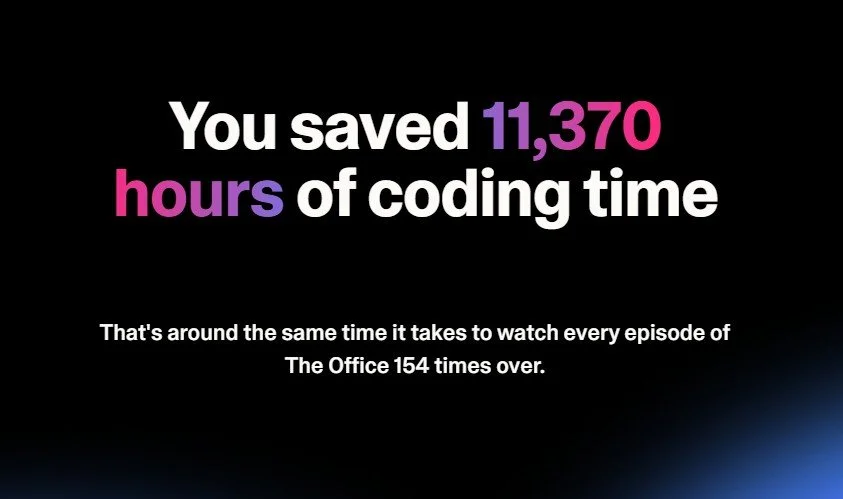
As it seems, most Lovable users vibe-coded less consistently, else I would not have been in the global 1% with 341,085 lines of (vibe code) per Lovable’s “2025 Vibes”.
Now, by February 2026, I have a functioning, fully vibe-coded App Beta that has pretty much all the features I was looking for, as well as API integrations with major wearable ecosystems such as Garmin, Oura, Strava & Withings (COROS, please reply to my API request, I have been wearing a Pace 4 in addition to my Garmin Fenix 6 since months to collect data for the integration).
Vibe coding an app as a non-technical person stirs up a mix of feelings. I am still amazed that I can “build” an entire app without help. In the past, this would have required hundreds of pages of introductions to a developer (team) and a budget of multiple tens of thousands of US Dollars. At the same time, I feel a bit of a “Vibe Coder Imposter Syndrome”. I am painfully aware that I barely understand the architecture choices for the underlying databases, that the more than 500,000 lines of code may be inefficient and could contain security vulnerabilities that automated security scans in Lovable may overlook. But how much does this actually matter? I am seriously not sure anymore.
From all that I am reading from seasoned developers (I guess everyone has read @mattshumer Matt Shumer’s viral article "Something Big is Happening", we are likely approaching the point where LLMs exceed the abilities of human coders.
By the time I am done polishing my App, the 500,000-line spaghetti-vibe code probably doesn’t need a full human redevelopment, but rather a multi-agent AI hardening. I am eagerly awaiting my trusted (human) expert's feedback.
In the worst-case scenario, I have a fully built-out working app that should make it easier for a team to rebuild, and I have learned a tremendous amount in the process of building it. In either case, I would still be more than happy to find a technical co-founder. (If you are a data scientist interested in fitness and health data, and in driving human peak performance, please feel free to reach out!)
The wheel of AI technology development spins dizzyingly fast. While I was focused on my daily vibe-coding in Lovable, others let their cheekily named personal OpenClaw bot run half of their lives. Reading about people buying Mac Studios to host Kimi K2, prompting in Json, or deploying multiple agents in Claude Opus 4.6 gives me FOMO chills and vintage Crypto-vibes. Again, I am painfully aware that my lack of technical ability has me (again) at the risk of falling behind.
However, I am fiercely determined not to let it happen again. While Crypto fascinated me from a technological, philosophical perspective, staying close to the application layer edge of the developments in AI is so much more of an existential requirement, not just for any manager.
If I manage to keep up with the development at least somewhat, I figure, I will have reason to be optimistic. What I realized over the past few weeks is that with every improvement of the models, the power shifts a little bit from those with technical knowledge to those with a clear vision. If agentic coding quality exceeds human coding abilities, the power lies entirely with those who have the best ideas and develop the most productive applications.
At least for a while, AI will dramatically equalize the playing field. Provided you have access to state-of-the-art models and a moderate budget for compute credits, your potential will largely depend on knowing what to do, not how to do it.
Until we eventually reach the singularity, and AI also beats us in ingenuity, we might see a golden window of opportunity for those with a problem-solving mind. Let’s make the best of it.